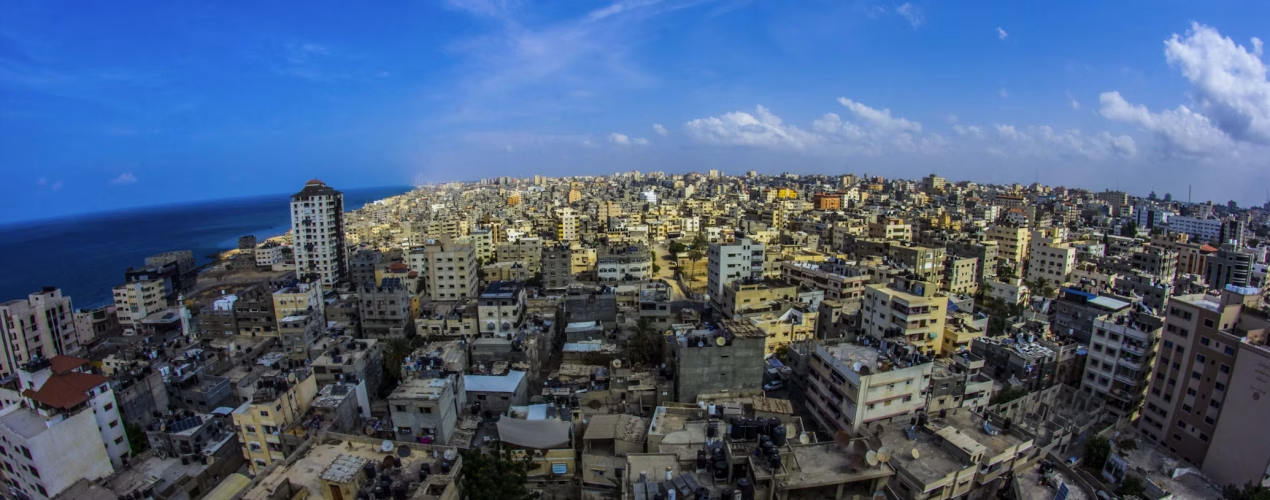
The Gaza Strip is a narrow coastal territory on the southeastern shore of the Mediterranean Sea, bordered by Egypt to the south and Israel to the north and east. You can see how it fits into the wider region on our location of Palestine page. For thousands of years, this stretch of coast was a vital link on the trade route between Egypt and the Levant, and its towns grew into busy centers of commerce, culture and religion.
Today the Gaza Strip is one of the most densely populated places on earth. It is home to five governorates and several historic towns, including Gaza City, Khan Younis, Rafah and Deir al-Balah. As with the other destinations in Palestine, the Strip’s long and layered history has left behind mosques, churches, monasteries and ancient harbors, many of which have suffered heavy damage in recent years.
| Fact | Details |
|---|---|
| Arabic name | قطاع غزة (Qita’ Ghazzah) |
| Location | Southeastern Mediterranean coast, bordered by Israel and Egypt |
| Size | About 41 km long, 6 to 12 km wide |
| Area | About 365 km² |
| Population | About 2.1 to 2.3 million before the war that began in October 2023; most residents have since been displaced |
| Governorates | North Gaza, Gaza, Deir al-Balah, Khan Younis, Rafah |
| Main cities | Gaza City (the largest), Khan Younis, Rafah, Deir al-Balah, Jabalia |
| Population profile | More than 70% are Palestinian refugees or their descendants, and the population is very young |
| Known for | One of the most densely populated places in the world; Mediterranean coastline; ancient history as a trading and port city |
Our Program in Palestine Content
Ancient Roots
The story of the Gaza Strip begins with Gaza itself, one of the oldest cities in the region. During the early Iron Age, Gaza became a leading Philistine city, closely associated with the worship of the god Dagon. The city appears often in biblical texts, most famously as the place where Samson is said to have brought down the Philistine temple.
Its position on the coastal road between Egypt and Syria made the area valuable from the very beginning. Caravans, armies and merchants all passed through, and the settlements along this coast grew wealthy from the steady flow of goods.
Empires and Conquests
Because of its strategic location, the Gaza region changed hands many times. The Assyrian king Tiglath-Pileser III captured Gaza in 734 BC, and in the sixth century BC it became a Babylonian stronghold. In 332 BC, Gaza resisted Alexander the Great for five months before finally falling, making it the last city to stand in his way on the road to Egypt.
Each new ruler left a mark on the region, and over the centuries the coastal towns absorbed influences from across the Mediterranean and the Near East.
Hellenistic and Roman Gaza
The Hellenistic and Roman periods brought prosperity and growth. The Greek historian Herodotus referred to the city as Kadytis, and under Roman rule Gaza developed into a cosmopolitan center with temples to Zeus, Aphrodite, Apollo and the local god Marnas. Nearby harbors such as Anthedon and Maiumas connected the region to Greece and the wider Mediterranean world.
During the Byzantine era, Christianity spread across the area, and monasteries and churches appeared along the coast. Some of these, such as the monastery of Saint Hilarion, became important centers of early Christian life in the Holy Land.
Islamic Rule and the Ottoman Period
Muslim forces took Gaza in 636 AD, and the region soon became an important religious and cultural center that attracted scholars and pilgrims. Over the following centuries, it passed through the hands of several dynasties, including the Mamluks, who built some of the area’s most notable structures.
In 1516, the region became part of the Ottoman Empire. Under Ottoman rule, Gaza remained a key stop for traders and for pilgrims traveling between Egypt, the Levant and the Arabian Peninsula.
The Modern Era: How the Gaza Strip Was Formed
British forces captured Gaza during World War I, and the area became part of Mandatory Palestine. The Gaza Strip as a separate territory took shape during the 1948 Arab-Israeli War, when tens of thousands of Palestinian refugees fled or were expelled to the area. Egypt administered the Strip until 1967, when it was occupied by Israel during the Six-Day War.
In the mid-1990s, following the Oslo Accords, the Palestinian Authority took over civil administration in much of the Strip. Israel withdrew its settlements and troops from inside the territory in 2005, and Hamas took control of the Strip in 2007. Since then, Israel has imposed land, air and sea restrictions on the territory. Participants in our Palestine and Israel internship explore this history and its effects on daily life in more depth. The war that began in October 2023 has caused massive destruction and displaced most of the population.
The Gaza Strip Today
Before the war, the Gaza Strip had a young and fast-growing population of over two million people, around 70% of whom were registered Palestine refugees or their descendants. Many lived in the territory’s eight refugee camps, which are among the most crowded places in the world. You can learn more about their history in the online course on Palestinian refugees, or support refugee communities in the West Bank through our volunteer program with refugees in Palestine.
The local economy relied on agriculture, especially citrus fruits, as well as fishing along the Mediterranean coast and traditional crafts. Beaches, seafood restaurants and public parks were part of everyday life in Gaza City and the coastal towns, and Gaza’s seafood and spicy dishes are a distinctive part of food in Palestine.
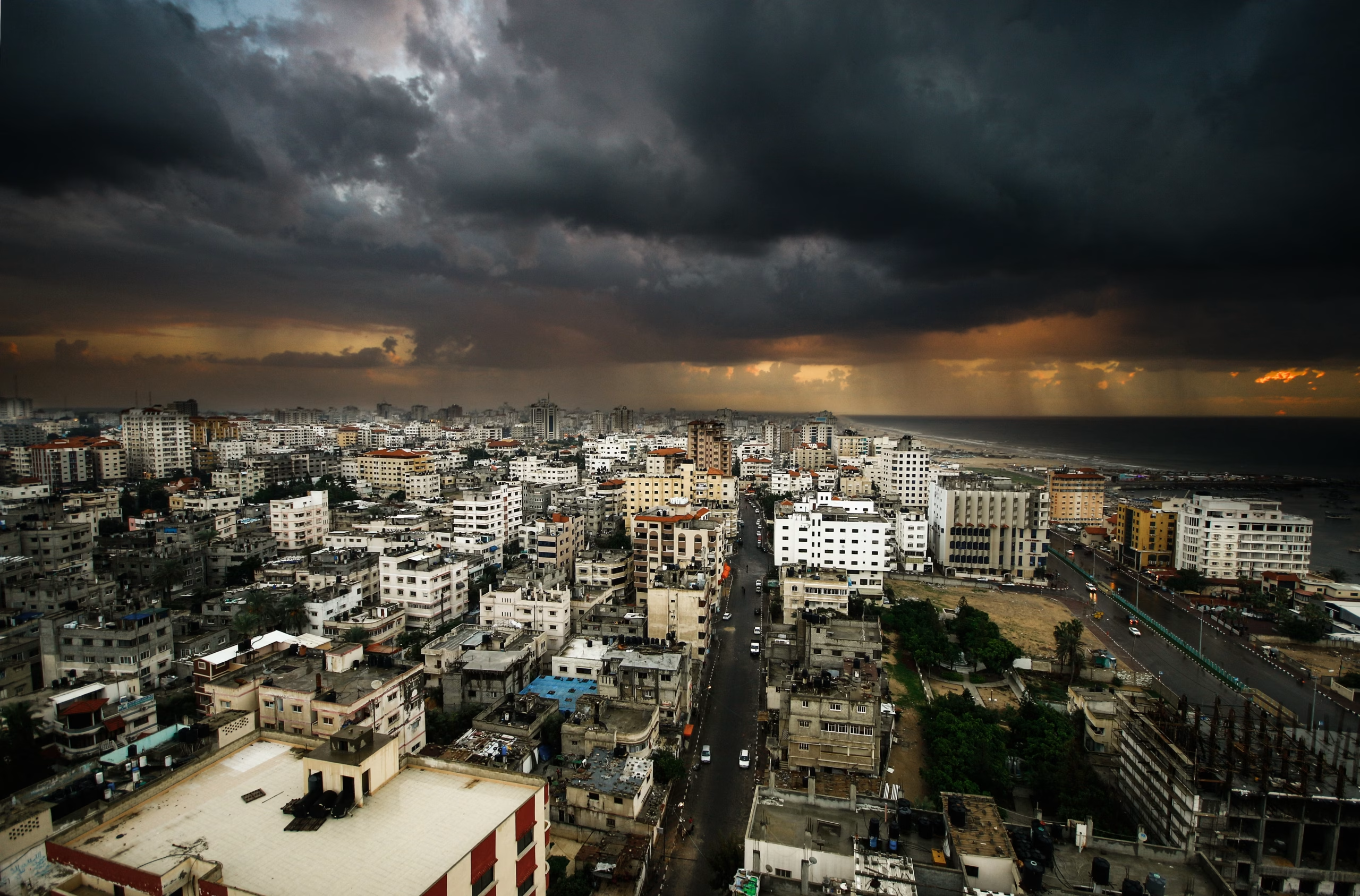
The war that began in October 2023 has changed the Gaza Strip dramatically. By late 2024, the United Nations estimated that around two thirds of all buildings had been damaged or destroyed, and the Palestinian Ministry of Tourism and Antiquities reports severe damage to many of the territory’s heritage sites. Most residents have been displaced, often several times.
Heritage Sites of the Gaza Strip
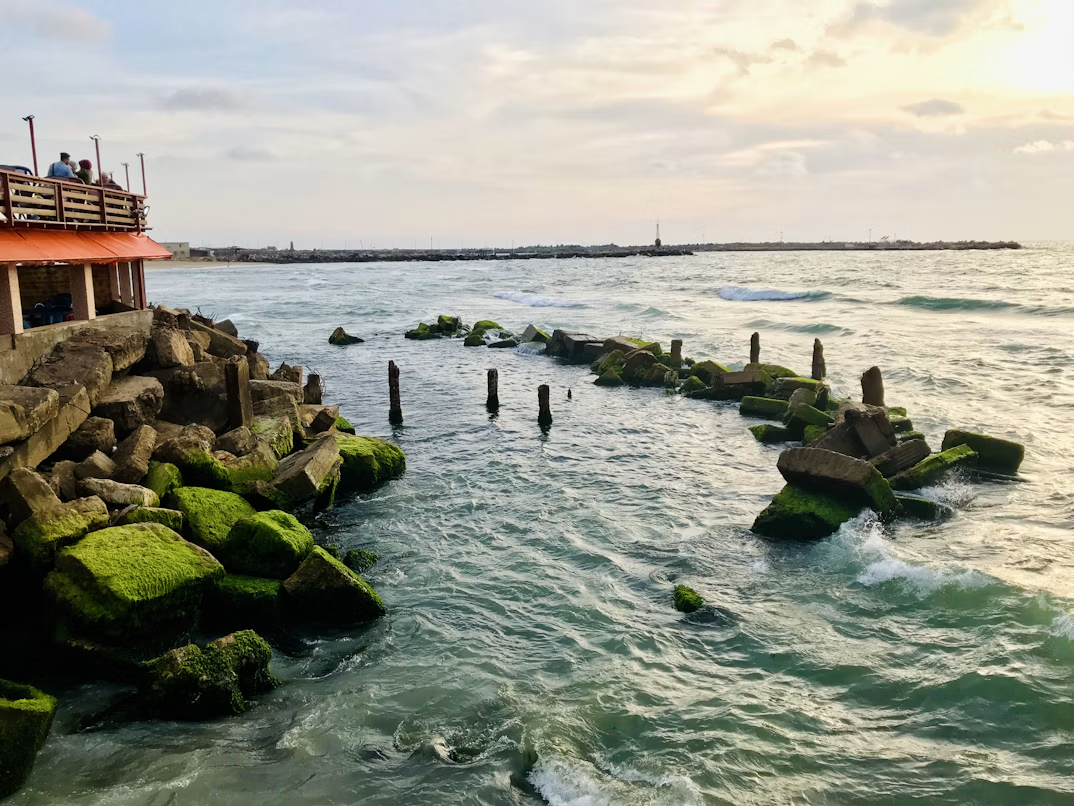
The Gaza Strip holds a remarkable concentration of historic sites for such a small area. Many of the places described below have been badly damaged or destroyed since October 2023, but they remain central to the identity and history of the Strip, and efforts to document and protect them are ongoing.
Heritage Sites in Gaza City
Gaza City is the largest city in the Strip and the site of its historic Old City, where mosques, churches and Ottoman-era buildings stand side by side.
The Great Omari Mosque
The Great Omari Mosque, located in the heart of Gaza City at the end of Omar Mukhtar Street, was the oldest and largest mosque in the city. It began as a Crusader church in the twelfth century and was later converted into a mosque, and local tradition holds that it was built on the site of the ancient temple of Marnas. The mosque also housed one of the most important libraries in Palestine. It was heavily damaged in December 2023, with reports that only its minaret was left standing.
Sayyed Hashem Mosque
Located in the Al-Daraj Quarter, Sayyed Hashem Mosque is one of the largest and most important mosques in Gaza City. It is believed to hold the tomb of Hashem bin Abd Manaf, the great-grandfather of the Prophet Muhammad, who according to tradition died in Gaza during a trading journey. Because of this connection, Muslims have long called the city Ghazzat Hashem. The mosque was also reported damaged during the war.
Church of Saint Porphyrius
The Greek Orthodox Church of Saint Porphyrius in the Al-Zaytun Quarter is one of the oldest churches in the world still in use. It is named after Saint Porphyrius, a fifth-century bishop of Gaza who is buried there. For centuries, the church has been the heart of Gaza’s Greek Orthodox community. In October 2023, the church compound was struck while hundreds of people were sheltering inside.
Qasr al-Basha (Napoleon’s Fort)
This stone palace on Al-Wahda Street dates back to the Mamluk period. Known as Qasr al-Basha, or the Pasha’s Palace, it earned the nickname Napoleon’s Fort because Napoleon is said to have stayed there briefly in 1799 during his campaign in the region. The building later served as a museum and was left in ruins during the war.
The Al-Zaytun and Al-Daraj Quarters
The Old City’s historic quarters are known for their traditional stone houses, many with finely carved wooden doors, and for the presence of mosques and churches within a few streets of each other. In the Al-Daraj Quarter stands the Abdulhamid public fountain, first built in the sixteenth century and restored under Ottoman Sultan Abdulhamid in 1893.
Anthedon Harbor
Anthedon was Gaza’s first known seaport, in use from around 800 BC to 1100 AD. Excavations north of Gaza City uncovered a Roman temple, walls, villas, workshops, mosaic floors and warehouses, along with a well-preserved mud-brick wall about 65 meters long and 8 meters high. The site has been damaged during the war.
Heritage Sites in the Central Gaza Strip
Tell Umm Amer and the Monastery of Saint Hilarion
Tell Umm Amer, located near the coast in the Deir al-Balah Governorate, is home to the remains of the Monastery of Saint Hilarion. Saint Hilarion, born in the area in 291 AD, is considered the founder of monasticism in Palestine, and his monastery was one of the first in the Holy Land. The site includes churches, a baptism hall, burial grounds, baths for pilgrims and traders, and beautiful mosaic floors. In July 2024, UNESCO added the site to both its World Heritage List and its List of World Heritage in Danger.
Deir al-Balah
Deir al-Balah, in the center of the Strip, is known for its date palms and coastline. Archaeologists have found a Late Bronze Age cemetery here, with pottery, tombs, bronze objects and burial coffins that reveal the town’s ancient importance.
Wadi Gaza
Wadi Gaza is the main valley crossing the Strip, winding its way to the sea through several large bends. Located where Africa and Asia meet, the wadi is an important stop for migratory birds such as herons, storks, ducks and flamingos, and it is home to the Palestine sunbird all year round. Pollution from sewage and waste has long threatened the valley, making its protection an urgent environmental issue.
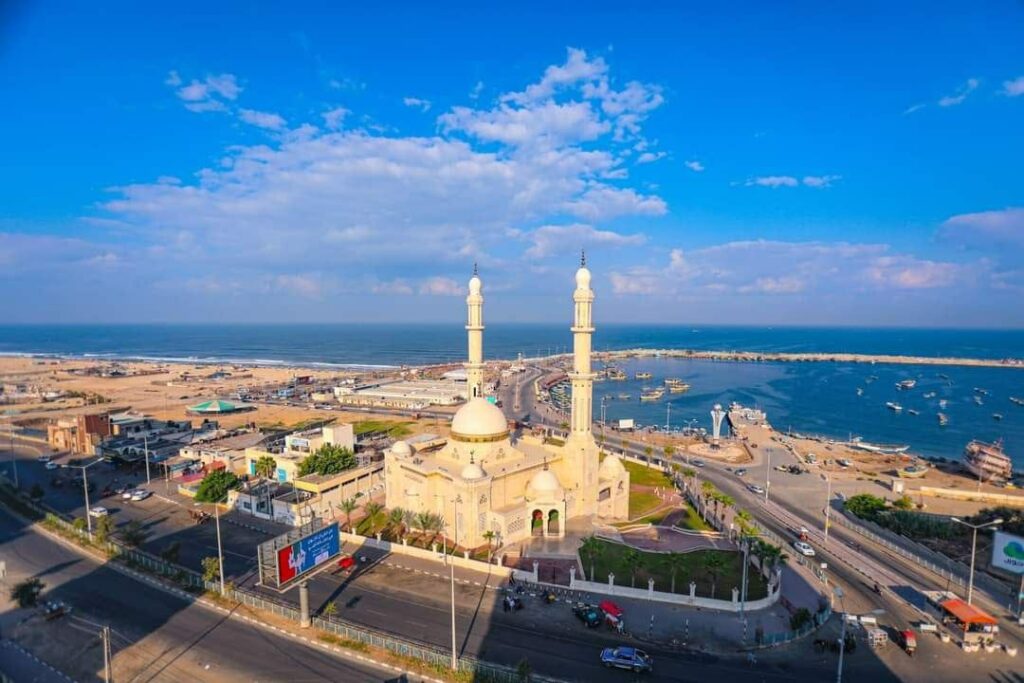
Heritage Sites in the Southern Gaza Strip
Khan Younis
Khan Younis, about 25 kilometers south of Gaza City, has long been the main market town for the farming villages around it. Its best-known landmark is a fortress built in the fourteenth century to protect travelers and pilgrims on the route between Egypt and the Levant. The town’s weekly market was traditionally one of the liveliest in the Strip.
Rafah
Rafah lies at the southern edge of the Gaza Strip on the border with Egypt. Known as Raphia in Greek and Roman times, it has a history reaching back to the Canaanite period, with archaeological finds that include old mosques and mosaic floors. Rafah is also home to the main crossing point between the Gaza Strip and Egypt.
Conclusion
The Gaza Strip carries a history far larger than its size. Over thousands of years, it has been a Philistine stronghold, a Hellenistic and Roman trading center, a cradle of early monasticism, a stop for Muslim pilgrims and scholars, and a home for generations of Palestinian families and refugees.
Its mosques, churches, harbors and monasteries tell the story of the many peoples and empires that passed through this coast. Even after the destruction of recent years, these sites remain an essential part of Palestinian heritage and of the culture of Palestine as a whole.
Protecting and rebuilding Gaza’s cultural and natural heritage, from the Old City of Gaza to Tell Umm Amer and Wadi Gaza, will be a long and difficult task. Documenting these places and sharing their stories is an important step in making sure the history of the Gaza Strip is not lost.
Contact Us
If you have any questions, please feel free to contact us at:
EC Website: https://excellencenter.org/
Instagram: https://www.instagram.com/excellence.center
Facebook page: https://www.facebook.com/ExcellenceCenter
YouTube page: https://www.youtube.com/@theexcellencecenterinpales4961