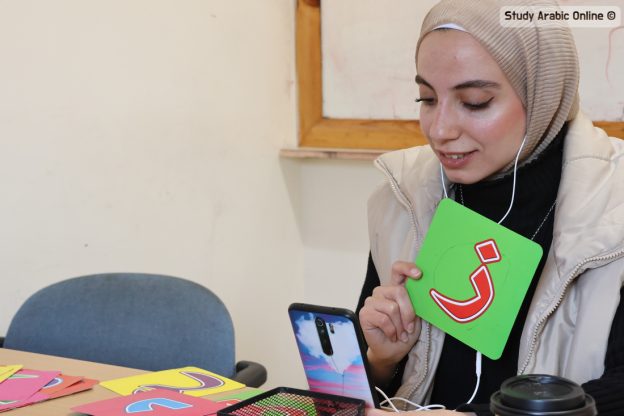
Advanced Modern Standard Arabic Online Course: At the advanced level, Arabic is no longer something you study. It is something you use, to read opinion pieces and literature, follow political debates, write reports, and discuss complex ideas with confidence.
Our Advanced Modern Standard Arabic Online Course helps strong learners reach that level of command. You study live with experienced native Arabic tutors, one to one or in a small group, in lessons held almost entirely in Arabic and shaped around your academic, professional, or personal goals.
This guide explains who the advanced course is for, what you will be able to do once you complete it, and how to start with a free trial lesson.
Book a Free Modern Standard Arabic Trial Lesson Online
Start your Modern Standard Arabic journey with a free online trial lesson. You will meet your certified tutor, talk about what you want to achieve, and experience a real one-to-one lesson. There is no payment and no commitment, just a simple first step toward reading, writing, and speaking Arabic.

Our Program in Palestine Content
Who Is the Advanced Course For?
The advanced course is designed for learners who already have a strong command of Modern Standard Arabic. You read with ease, write well-organized paragraphs, and can discuss a wide range of topics, but you want greater fluency, precision, and range.
It is especially suitable for:
- Graduates of intermediate or upper-intermediate MSA study
- University students and researchers working with Arabic sources
- Translators and interpreters refining their skills
- Journalists and media professionals
- Diplomats, NGO staff, and professionals who use formal Arabic at work
- Heritage speakers who want full command of the standard language
- Learners interested in Arabic literature and intellectual history
If you are unsure whether you are ready, you can take our free placement test or talk through your level with a tutor during your free trial lesson.

What Is Advanced Modern Standard Arabic?
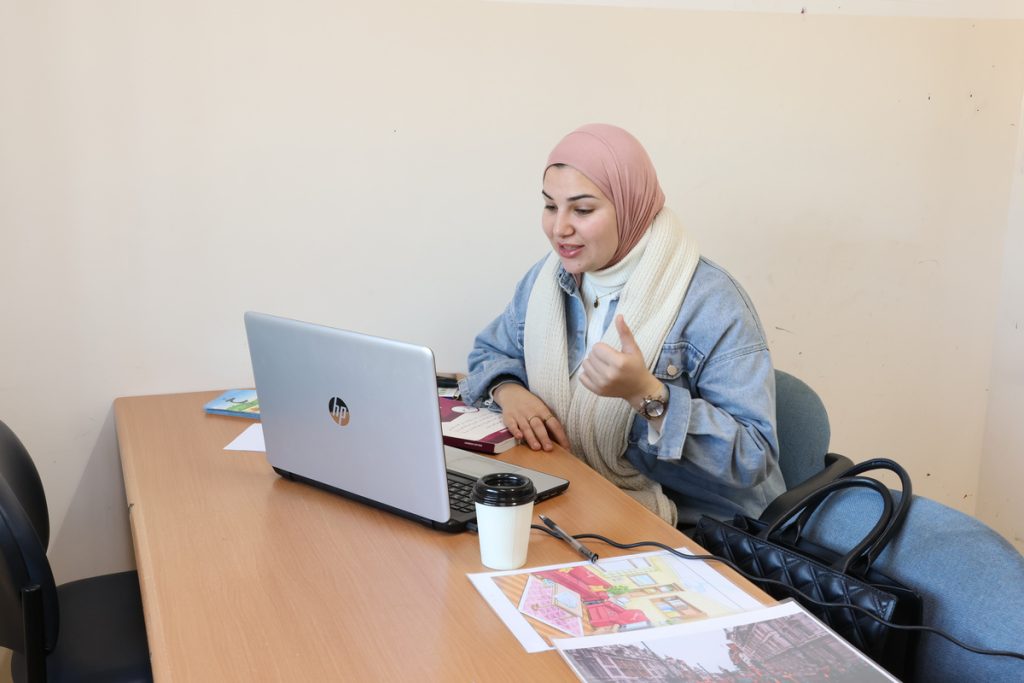
Modern Standard Arabic (MSA) is the formal language of education, media, literature, and official communication across the Arab world. It is understood in twenty-two countries, and it carries the long literary heritage of the Arabic language, from classical poetry to the modern novel.
At the advanced level, you go beyond understanding it toward using it naturally and flexibly. You work with authentic, unadapted material, learn to follow complex arguments, and practice adjusting your style to different audiences, from academic writing to formal speech.
Lessons are held almost entirely in Arabic, so every session is also practice in thinking and responding in the language.
Register and Style in Formal Arabic
Advanced learners need more than correct grammar. They need to know which kind of Arabic suits each situation. A research paper, a news report, a speech, and a formal email all call for different choices in vocabulary, sentence length, and tone.
Your tutor helps you recognize these differences in what you read and hear, and practice them in what you write and say. You also learn how educated speakers move between Modern Standard Arabic and more relaxed, semi-formal speech in discussions and interviews, so you can follow and join in naturally.
Native Tutors Who Work at Your Level
Your lessons are taught by experienced native Arabic tutors who work with advanced learners from academic, professional, and media backgrounds. They hold degrees in Arabic or English studies and have taught students from more than 35 countries.
At this level, your tutor focuses on the details that separate good Arabic from excellent Arabic: precise word choice, sentence structure, register, and style. They give detailed feedback on your speaking and writing and help you sound clear and natural in formal Arabic.
What Will You Be Able to Do?
By the time you complete the advanced course, you should be able to:
- Understand a wide range of demanding texts, including long and complex ones
- Recognize implicit meaning, tone, and stylistic choices
- Express your ideas fluently and spontaneously, without searching for words
- Use Arabic flexibly and effectively for social, academic, and professional purposes
- Write clear, well-structured, and detailed texts on complex subjects
- Present, debate, and defend a position in formal Arabic
These are the skills needed for university study, research, translation, and professional work in Arabic.


Moving from Intermediate to Advanced Arabic
Advanced study differs from the intermediate level in three important ways.
First, the material is authentic. You read and listen to Arabic written and spoken for native audiences, not for learners, so you get used to the full range of vocabulary and style.
Second, accuracy is no longer enough. Your tutor focuses on how natural, precise, and appropriate your Arabic sounds, and on choosing the right register for each situation.
Third, you take the lead. Advanced lessons are built around your interests and needs, and you often choose the texts, topics, and tasks yourself.
Advanced Course Focus Areas
Your course can focus on one area or combine several, depending on your goals.
Reading Complex Texts
You read opinion articles, essays, reports, and literary works. Your tutor helps you follow complex arguments, understand rhetorical devices, and build a rich, active vocabulary.
Advanced Writing
You practice essays, reports, summaries, formal letters, and analytical texts. Your tutor reviews your writing in detail and helps you improve structure, cohesion, and style.
Fluent Speaking
Lessons include extended discussions, debates, and presentations. You learn to explain complex ideas, respond to counterarguments, and speak at length without preparation.
Listening to Authentic Media
You work with news broadcasts, interviews, documentaries, and lectures, so you can follow formal Arabic at natural speed.
Professional and Academic Arabic
Lessons can focus on the language of your field, from political, legal, and economic vocabulary to academic presentations and research terminology.
Advanced Grammar and Style
You refine your use of complex grammatical structures and learn how to vary your style for different purposes and audiences.
Building an Advanced Vocabulary
At this level, vocabulary growth is about depth as much as size. You learn synonyms and the fine differences between them, fixed expressions and collocations, and the specialized terms used in politics, economics, law, and academic writing.
Your tutor helps you move new words from passive recognition into active use. You meet them first in authentic texts, then practice them in discussion and writing until they become a natural part of how you express yourself.
Advanced Arabic for Specific Careers
Many advanced learners study MSA for professional reasons. Your course can be built around the demands of your field.
Translation and Interpreting
You practice moving accurately between Arabic and English, paying close attention to terminology, style, and meaning. Lessons can include sight translation, summary writing, and work with specialized texts.
Journalism and Media
You read and analyze news reports, editorials, and interviews, learn the vocabulary of politics and current affairs, and practice conducting interviews and writing short articles in Arabic.
Diplomacy and International Work
You prepare for formal meetings, speeches, and negotiations, and learn the polite and precise language used in official communication.
Academic Research
You work with scholarly articles, historical sources, and theoretical texts, and practice presenting your own research and discussing it with Arabic-speaking colleagues.


A Typical Advanced Session
Advanced lessons are flexible, but a session might look like this. You begin by summarizing an article or chapter you read for self-study and sharing your view on it. Your tutor asks challenging follow-up questions, pushing you to explain, justify, and expand your argument.
Next, you look closely at a passage from the text, analyzing its structure, vocabulary, and style. Your tutor highlights expressions worth adding to your own Arabic and explains any complex grammar.
The session ends with feedback on your speaking and a new task, such as writing a response to the text or preparing a short presentation for the next lesson.
Personalized Advanced Lessons
Advanced learners usually have very specific needs, so your course is built around you. Your tutor can adapt the lessons to your:
- Current level and strengths
- Academic or research interests
- Professional field
- Reading and writing goals
- Preferred topics and materials
- Available study time
You can bring your own texts, such as articles, documents, or research sources, and work through them with your tutor.
One-to-One Advanced Modern Standard Arabic Online Course
You can choose the format that suits you best.
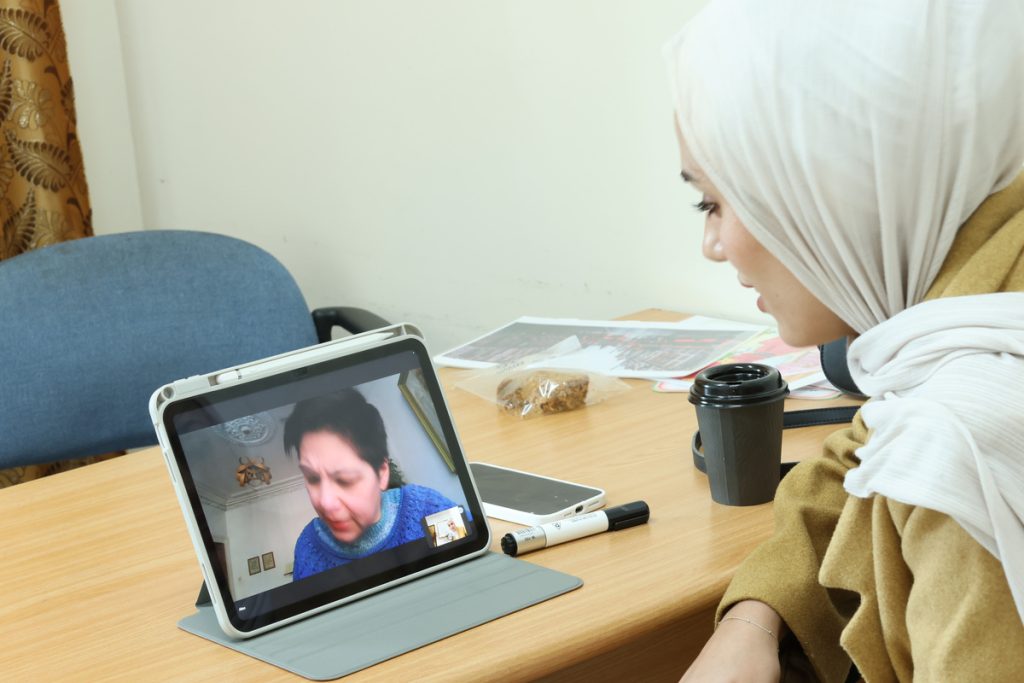
One-to-one lessons give you your tutor’s full attention. Your course follows your goals exactly, whether you are preparing for university, working with Arabic documents, or improving your conversation skills.
Small Group Advanced Modern Standard Arabic Online Course
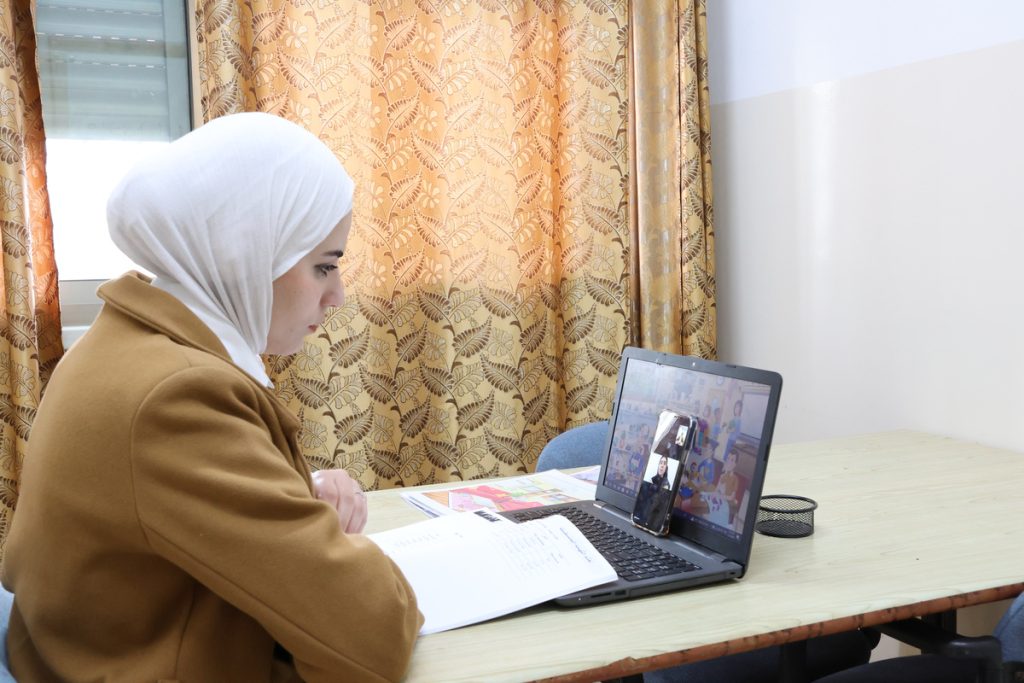
Small group courses let you practice discussions, presentations, and reading activities with other learners at the same level. Availability, group size, and schedules may vary.
Guided Independent Study
Advanced learners make the fastest progress when live lessons are supported by focused independent work. Your tutor sets guided self-study tasks between sessions, such as reading a long article or chapter, preparing a presentation, writing an essay or summary, or analyzing a news broadcast.
In your next lesson, you discuss the material with your tutor, who reviews your work and uses it to plan the next steps. This approach lets you cover far more authentic Arabic than live lessons alone would allow.
Advanced Modern Standard Arabic Course Overview
| Feature | Details |
|---|---|
| Course | Advanced Modern Standard Arabic Online Course |
| Language | Modern Standard Arabic (Fusha) |
| Level | Advanced |
| Prior knowledge | Strong command of MSA reading, writing, and speaking |
| Teaching language | Almost entirely Arabic |
| Lesson format | One-to-one or small group |
| Lesson length | 45 minutes |
| Course length | 10 to 100 hours, chosen by the student |
| Hours per week | Flexible, from 1 hour to intensive schedules |
| Self-study | Guided reading, writing, and listening tasks between lessons |
| Participants | 16 to 75 years old |
| Online platforms | Zoom, Skype, WhatsApp, and others |
| Class times | Flexible, in any time zone |
| Learning materials | Free PDF materials and booklet and authentic material |
| University credit | Available |
| Certificate | Certificate of Completion from Volunteer in Palestine |
| Trial lesson | Free |
| Placement test | Free |
| Fees | See our fees and payment options |
Modern Standard Arabic and Spoken Arabic Together
Even advanced MSA speakers often find that everyday conversation in the Arab world sounds quite different from formal Arabic. Many of our advanced learners therefore combine their MSA studies with a spoken dialect, such as Levantine Arabic.
With a strong foundation in MSA, learning a dialect becomes much faster, since you already know most of the roots and grammar. You can read more about our Modern Standard Arabic online program and how it fits alongside our dialect courses.
Sample Topics for Advanced Lessons
Advanced lessons can cover almost any subject. Some popular areas include:
- Politics, international relations, and current affairs
- Economics, business, and development
- Law, human rights, and governance
- Modern and classical Arabic literature
- History and intellectual movements in the Arab world
- Society, culture, and the arts
- Science, technology, and the environment
- Religion and philosophy
Your tutor selects texts and media from these areas, or from any other field you are working in.
Keeping Your Arabic Strong Between Lessons
At the advanced level, daily contact with Arabic keeps your skills sharp. Alongside your guided self-study, your tutor may suggest habits such as:
- Reading an Arabic news site or opinion column each day
- Listening to Arabic podcasts, lectures, or radio while commuting
- Keeping a journal or blog in Arabic
- Following Arabic-language experts in your field on social media
- Watching documentaries and talk shows in Arabic
- Writing short summaries of what you read or hear
These small routines add up quickly and help you use the language naturally outside your lessons.
Why Study Advanced Arabic Online?
For advanced learners, online study offers more than convenience. You can work with the same experienced tutor wherever you live or travel, fit lessons around demanding work or research schedules, and use digital resources such as news sites, recordings, and shared documents directly in the lesson.
It also lets you keep your Arabic at a high level over the long term, with regular sessions that continue even after you move, change jobs, or finish your degree.
What Do You Need to Study Online?
All you need is a laptop, tablet, or smartphone with a camera and microphone, plus a stable internet connection. A quiet space helps you concentrate during discussions and presentations.
You do not need an academic degree, current university enrollment, or any language other than English. The only requirement is a level of Arabic suitable for advanced study.
Your study materials, including PDF resources and a course booklet, are provided free of charge, and your tutor adds authentic texts and recordings chosen for your goals.


How We Track Your Progress
At the advanced level, progress can be harder to notice, so your tutor makes it visible. Regular writing tasks are reviewed in detail, recurring errors are tracked over time, and your speaking is assessed through presentations and debates.
Your tutor also checks in with you on your goals and adjusts the course as your needs change, so your lessons always focus on what will help you most.
Starting Your Advanced Course
To begin, book a free trial lesson. Your tutor will assess your level, discuss your goals and preferred topics, and give you a sense of how advanced lessons work.
From there, you choose one-to-one or group lessons and the number of hours per week. Your tutor designs a program around authentic material from your field or interests, and your guided self-study keeps you reading and writing between sessions.
Reviews and Community Awards
Volunteer in Palestine has been honored with several prestigious Community Awards and recognized as the Best Language School and Top Volunteer and Internship Program Provider for 2019, 2021, 2022, 2023, 2024, and 2025. For more details, please visit our profiles on GoOverseas.com and GoAbroad.com.


- +1000 reviews (96.5%) on gooverseas.com
- +190 reviews (96%) on goabroad.com
- Participants’ video testimonials
- Our Awards
Reach an Advanced Command of Modern Standard Arabic
Advanced study is where your Arabic gains depth and precision: the right word instead of a close one, a well-built argument instead of a list of points, and the confidence to read and discuss almost anything in formal Arabic.
At Volunteer in Palestine, your advanced course is personal, flexible, and built around your goals. Your experienced native tutor keeps raising the challenge, so your Arabic keeps growing.
Take the next step now. Book your free trial lesson and start working toward an advanced command of Modern Standard Arabic.
Contact Us
If you have any questions, please feel free to contact us at:
EC Website: https://excellencenter.org/
Instagram: https://www.instagram.com/excellence.center
Facebook page: https://www.facebook.com/ExcellenceCenter
YouTube page: https://www.youtube.com/@theexcellencecenterinpales4961
Tags: Advanced Arabic Language Course Online, Modern Standard Arabic for Advanced Learners, Online Advanced Arabic Classes